
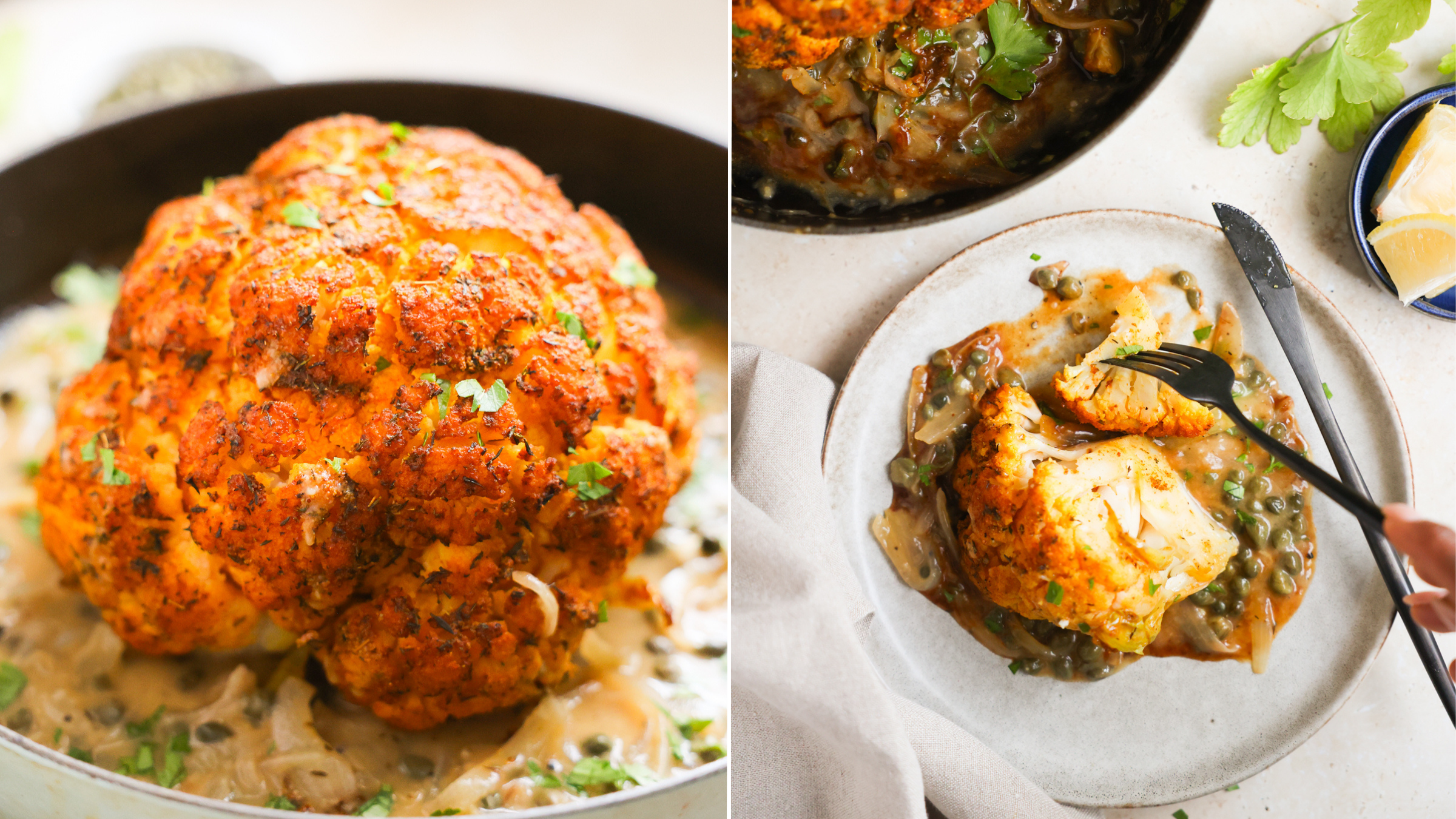
This Whole Roasted Cauliflower with Piccata Sauce features tender, golden cauliflower that’s steamed, then roasted, and served with a super-flavorful lemon-caper gravy. It’s a great, easy main for weeknights, yet impressive enough to serve at holiday celebrations.
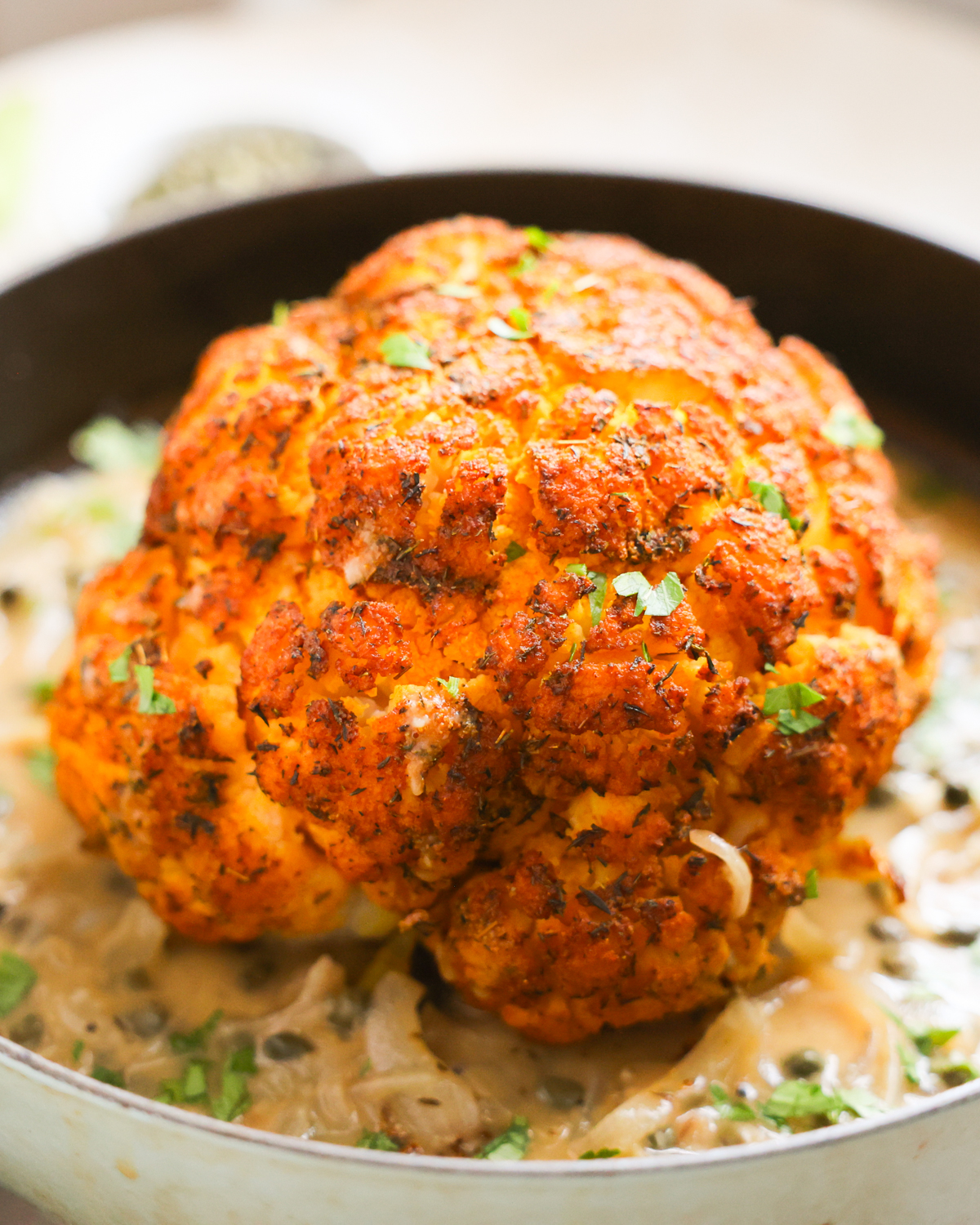
Elevate your weeknight meals and dinner parties with this whole roasted cauliflower recipe. It only takes 30 minutes to make a stunning, flavor-packed main dish everyone will be talking about well past the dinner conversation.
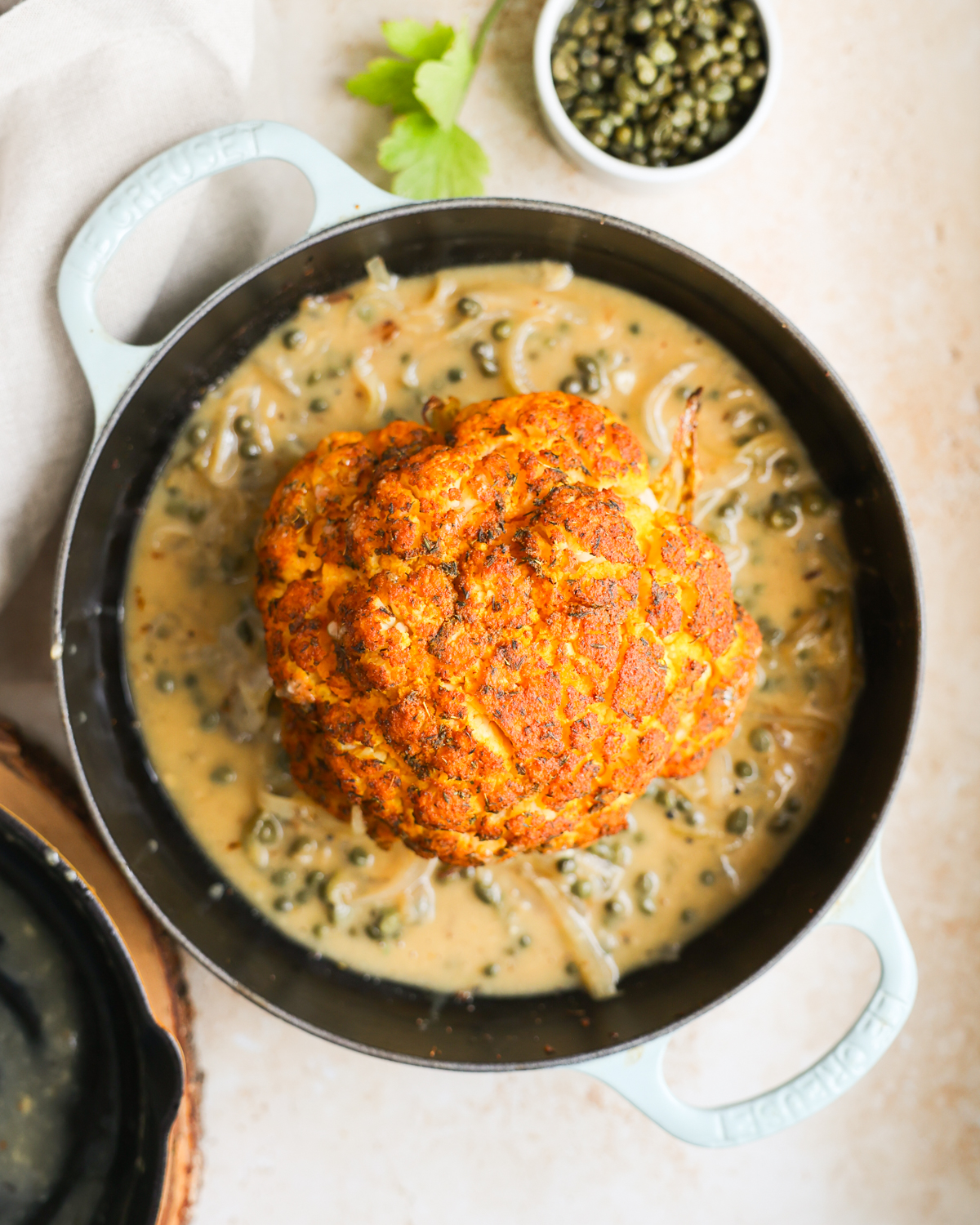
The process starts with a whole cauliflower head that is steamed, then brushed with a mixture of smoked paprika, garlic powder, thyme, turmeric, and salt, before being roasted in the oven until golden brown. Once roasted, the fragrant cauliflower is paired with a tangy, silky piccata sauce that features zesty lemon, capers, and caramelized onions. The bright gravy-like sauce perfectly complements the tender roasted cauliflower, delivering a gourmet-style dish that’s incredibly easy to make!
For easier, elevated main dish recipes, try my Vegan Fennel Paella, Mushroom Wellington, and Vegan Creamy Pasta with Seared Mushroom Scallops.
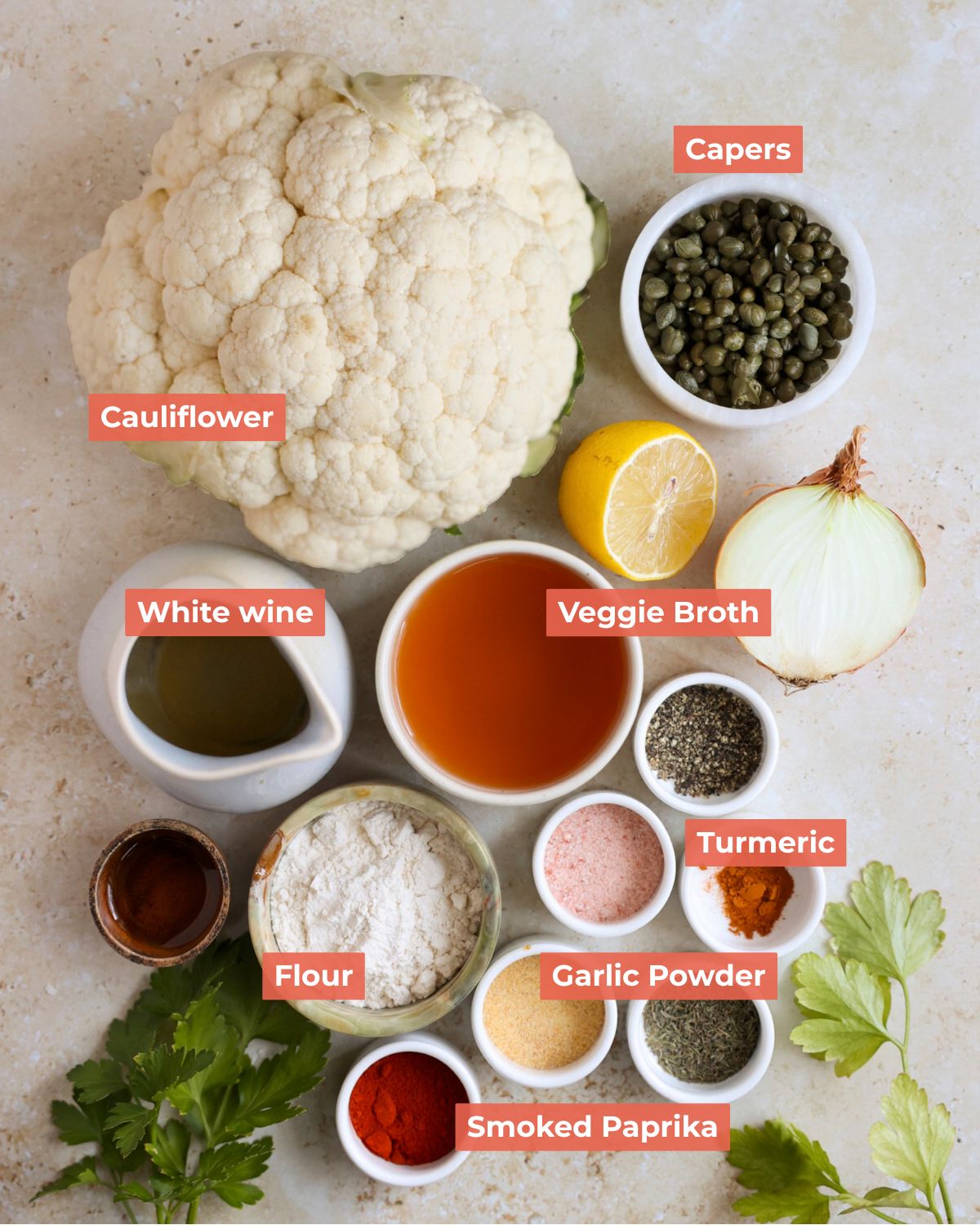
Ingredients
Cauliflower: Choose a medium whole cauliflower, about 2 pounds in weight. Look for a firm head with tightly packed florets and no browning. This size cooks evenly and fits well in most pans.
Seasonings: Dried Thyme adds an earthy, aromatic note to the roasted whole cauliflower. Oregano can be used as a substitute. Smoked paprika enhances the cauliflower’s color and infuses a subtle smoky flavor. Garlic powder provides an even layer of nutty garlic flavor, and turmeric powder adds a mild and earthy warmth to the roasted cauliflower head. Omit if desired, but I recommend it for a beautiful golden finish.
Extra Virgin Olive Oil: Used for brushing the cauliflower and sautéing the onions. Choose a high-quality olive oil for the best flavor, or use avocado oil for a more neutral taste.
Yellow Onion or Leek: Onions caramelize when sautéed, adding delicious depth to the piccata sauce. Or use leeks for a milder, slightly sweet finish.
All-Purpose Flour: Thickens the piccata sauce. Use equal amounts of an all-purpose gluten-free flour to suit dietary needs.
Dry White Wine: Pinot Grigio, Sauvignon Blanc, or Chardonnay works well for the sauce, adding acidity and complexity. If you don’t have wine, you can use more vegetable broth.
Vegetable Broth: Use a high-quality store-bought broth or water plus Better Than Bouillon vegetable for the richest flavor.
Lemon Juice: Fresh lemon juice is essential to give the piccata sauce a bright, signature tanginess.
Black Pepper: Freshly ground black pepper adds warmth and balances the lemon’s acidity in the sauce.
Fresh Parsley: Adds a pop of color and freshness as a garnish when serving the whole baked cauliflower.
Recipe Variations
Customize your whole roasted cauliflower with these optional flavor variations:
- Herb-Crusted: Add 1 tablespoon of finely chopped fresh rosemary, thyme, or sage to the spice mix for an herby, holiday-inspired outer crust.
- Creamy Piccata Sauce: Stir in 2-3 tablespoons of coconut cream or cashew cream at the end of simmering the sauce to create an extra velvety texture.
- Extra Zesty: Add the zest of half a lemon to the sauce, or serve the baked whole cauliflower with lemon wedges for an extra citrusy punch.
- Mushroom Piccata Sauce: Sauté up to 1 cup sliced cremini mushrooms with the onions for a deeper umami and a more robust, “meaty” sauce.
- Spicy Piccata: Add ½ teaspoon crushed red pepper flakes to the sauce for a subtle kick that balances the lemony tang.
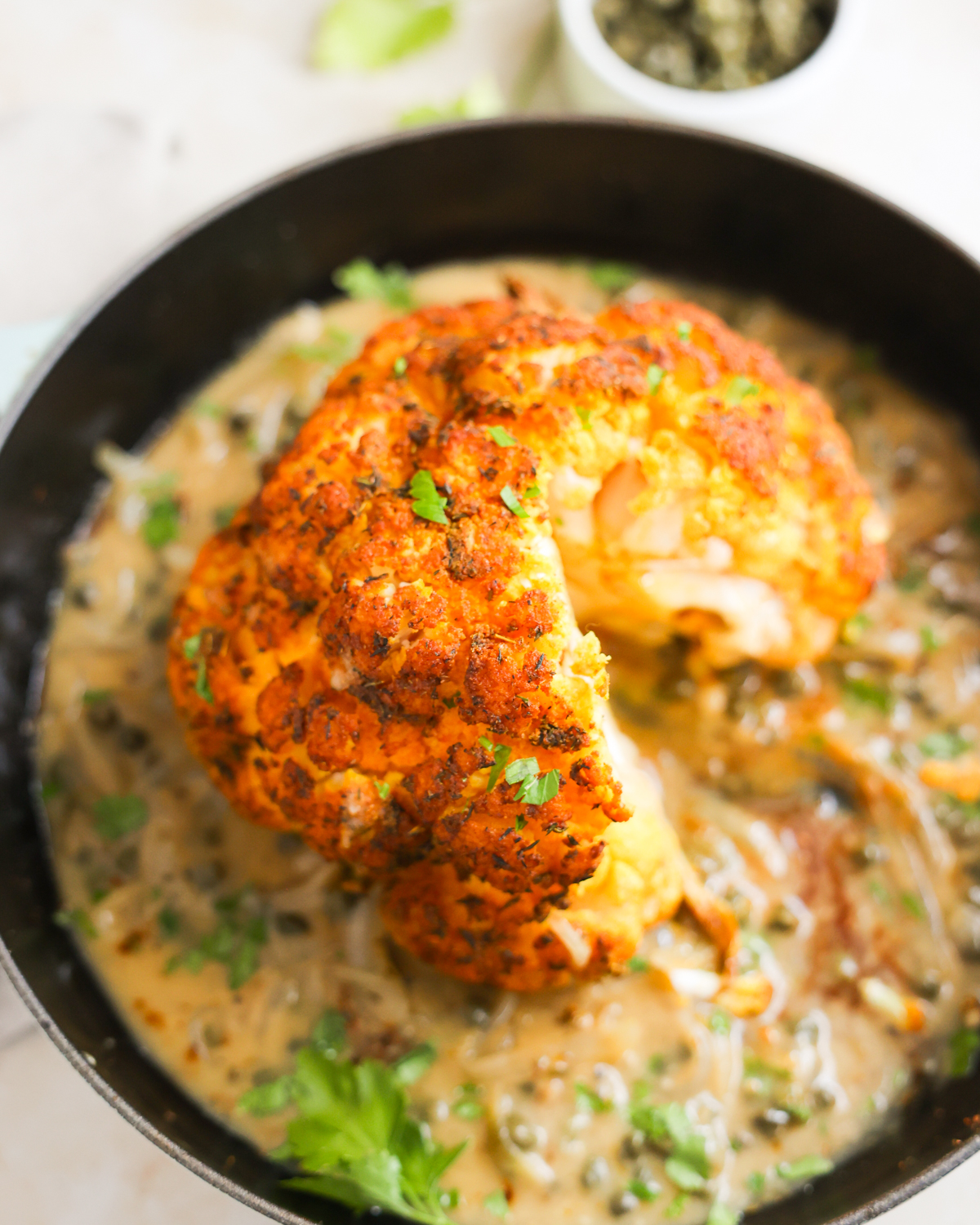
Serving Suggestions
Whole roasted cauliflower recipes make a stunning and delicious plant-based main dish, whether you want to elevate your weeknight dinners or impress holiday guests. Serve with your favorite sides, like some of my favorites below:
How to Make Whole Roasted Cauliflower Piccata
Whether you’re a beginner or an experienced cook, this roasted whole cauliflower recipe is easy to make. Here’s how:
- Steam the Cauliflower. Place the trimmed cauliflower in a steamer basket in a large pot, cover, and steam on medium-high heat for about 10-15 minutes, or until it can be easily pierced with a knife.
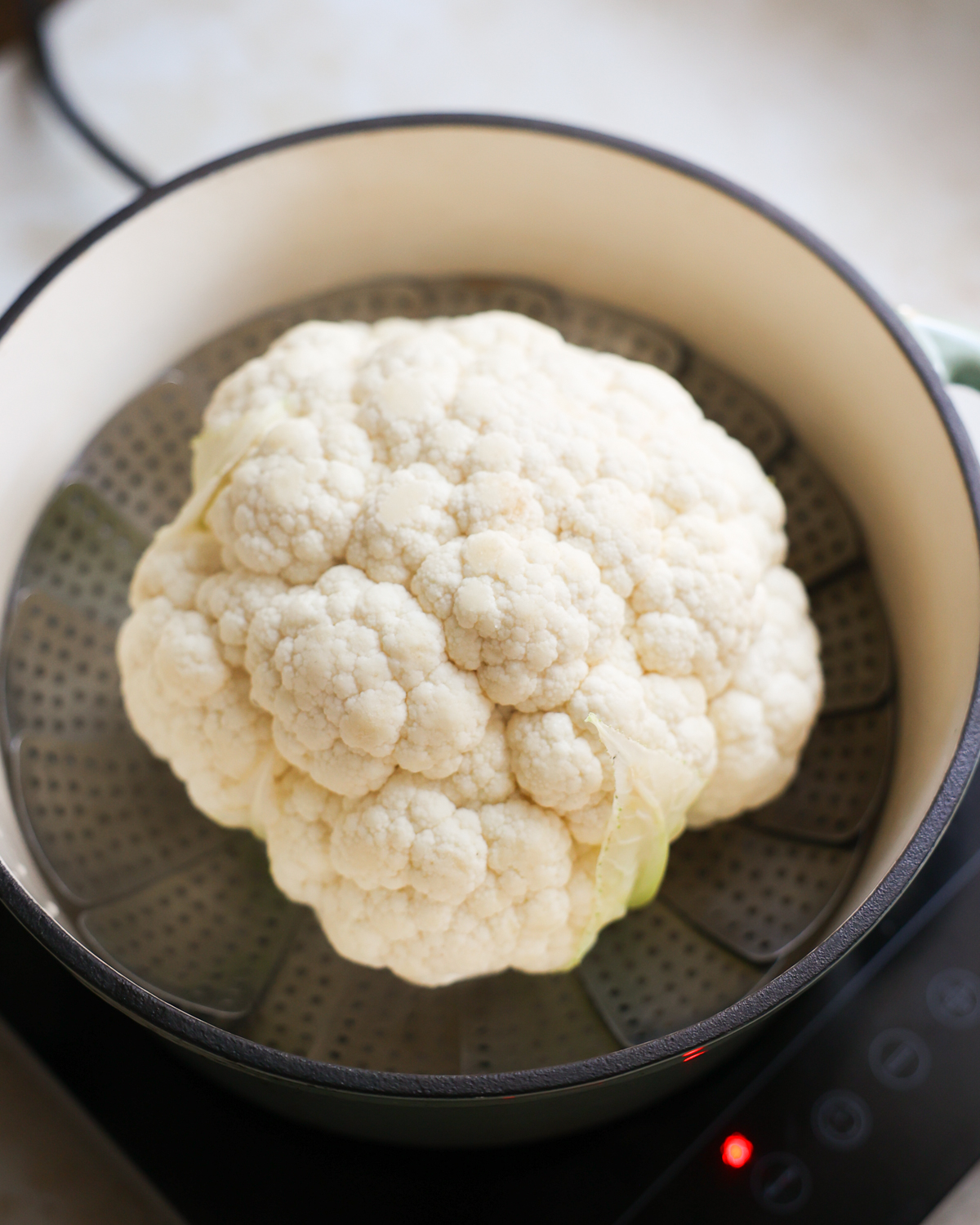
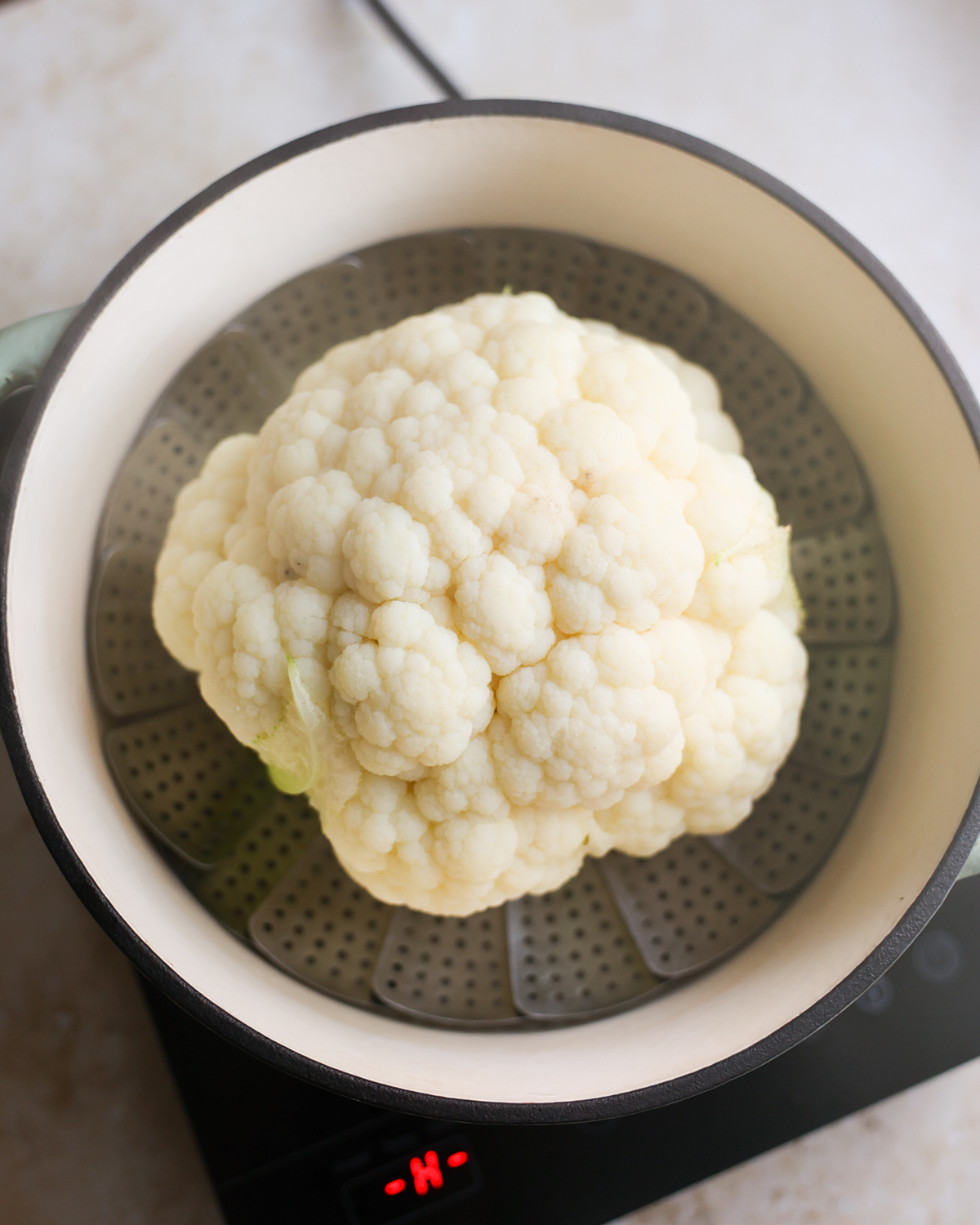
- Cool the Cauliflower. Remove the pot from the heat and take off the lid. Allow the cauliflower to cool for about 5 minutes or until safe to handle. Preheat the oven to 375°F.
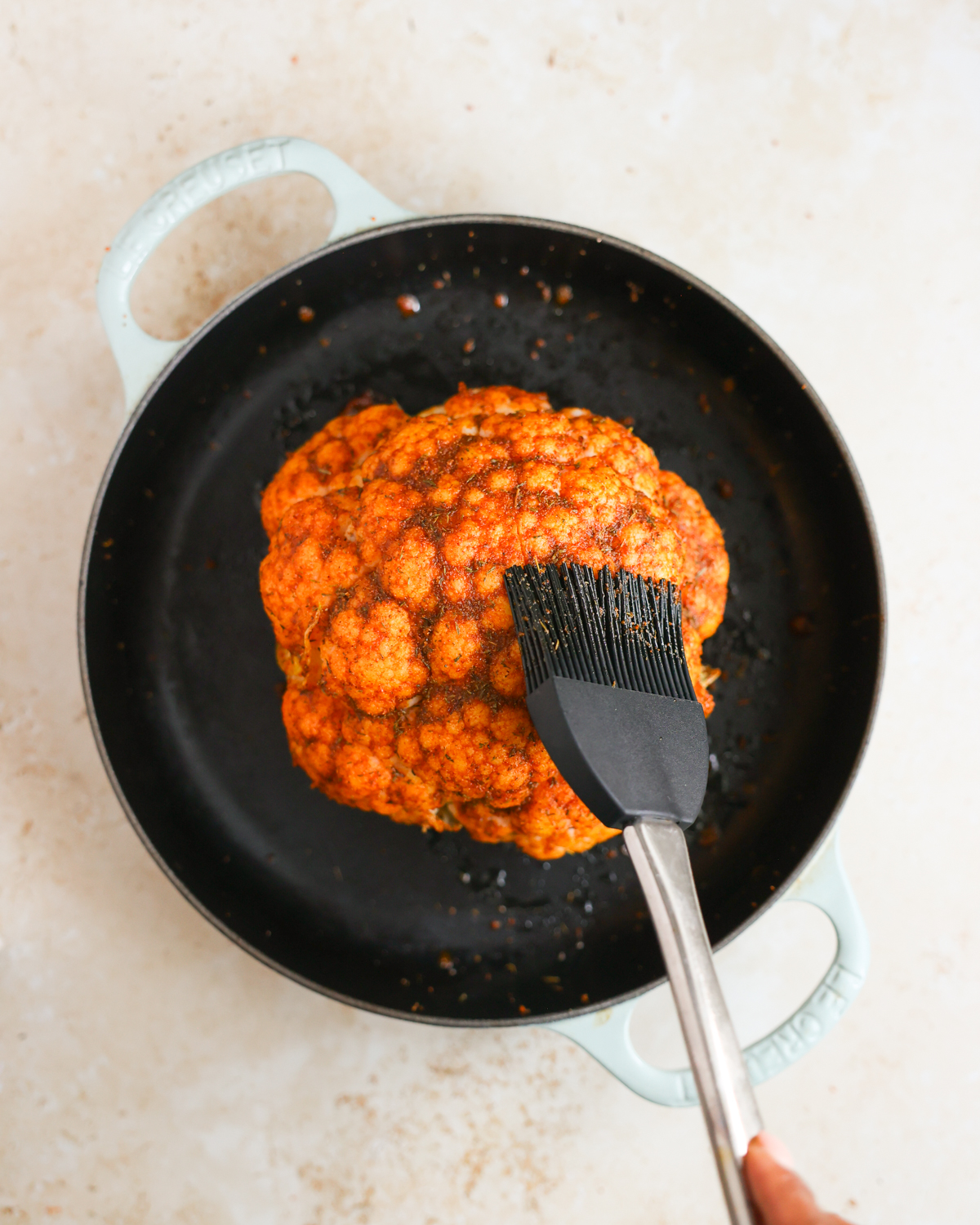
- Season the Cauliflower. Transfer the cooled cauliflower to a baking dish or a cast-iron skillet. In a small bowl, combine the salt, thyme, paprika, garlic powder, turmeric, and olive oil. Brush the mixture onto the cauliflower, using your hands or a pastry brush to coat its entire surface.
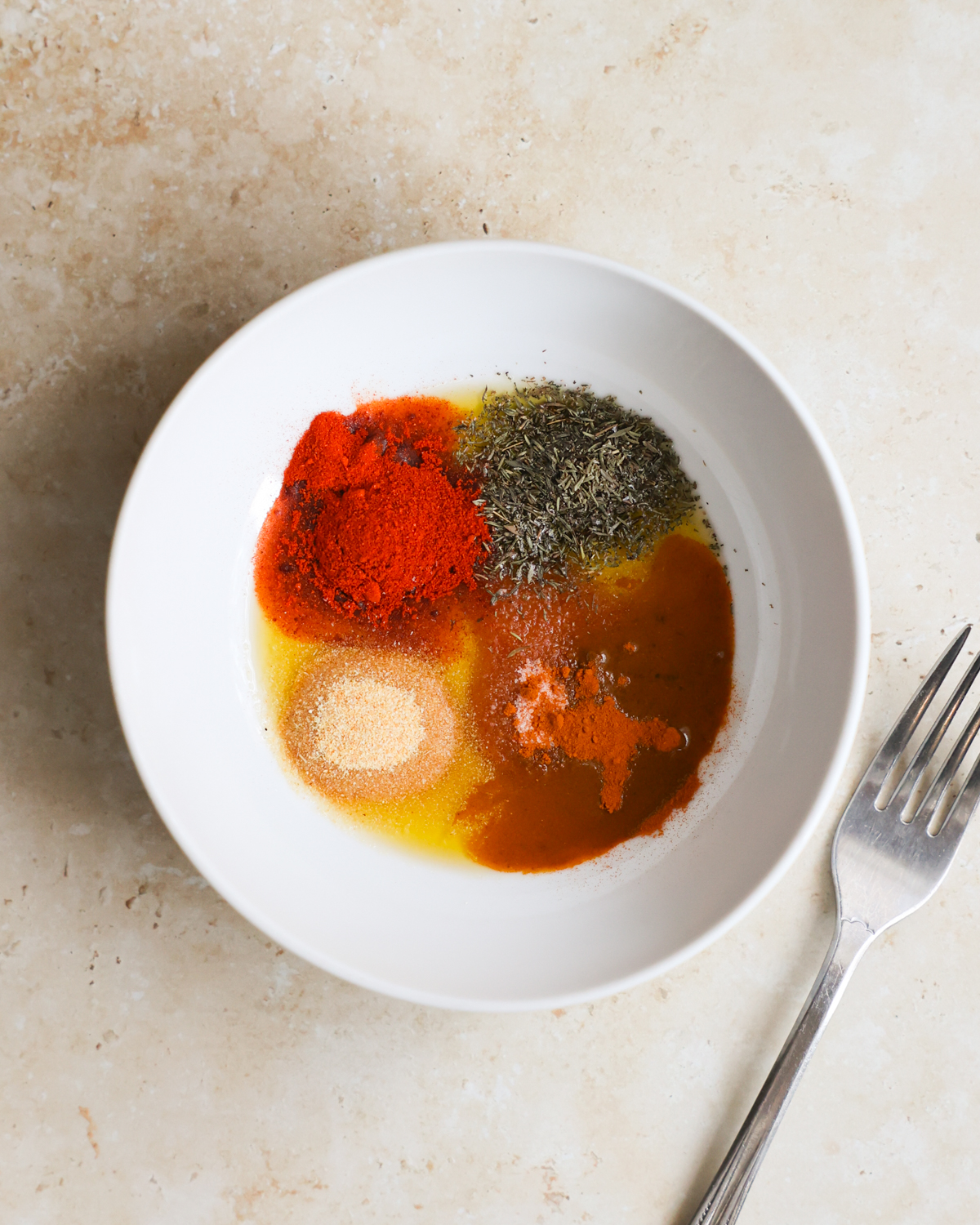
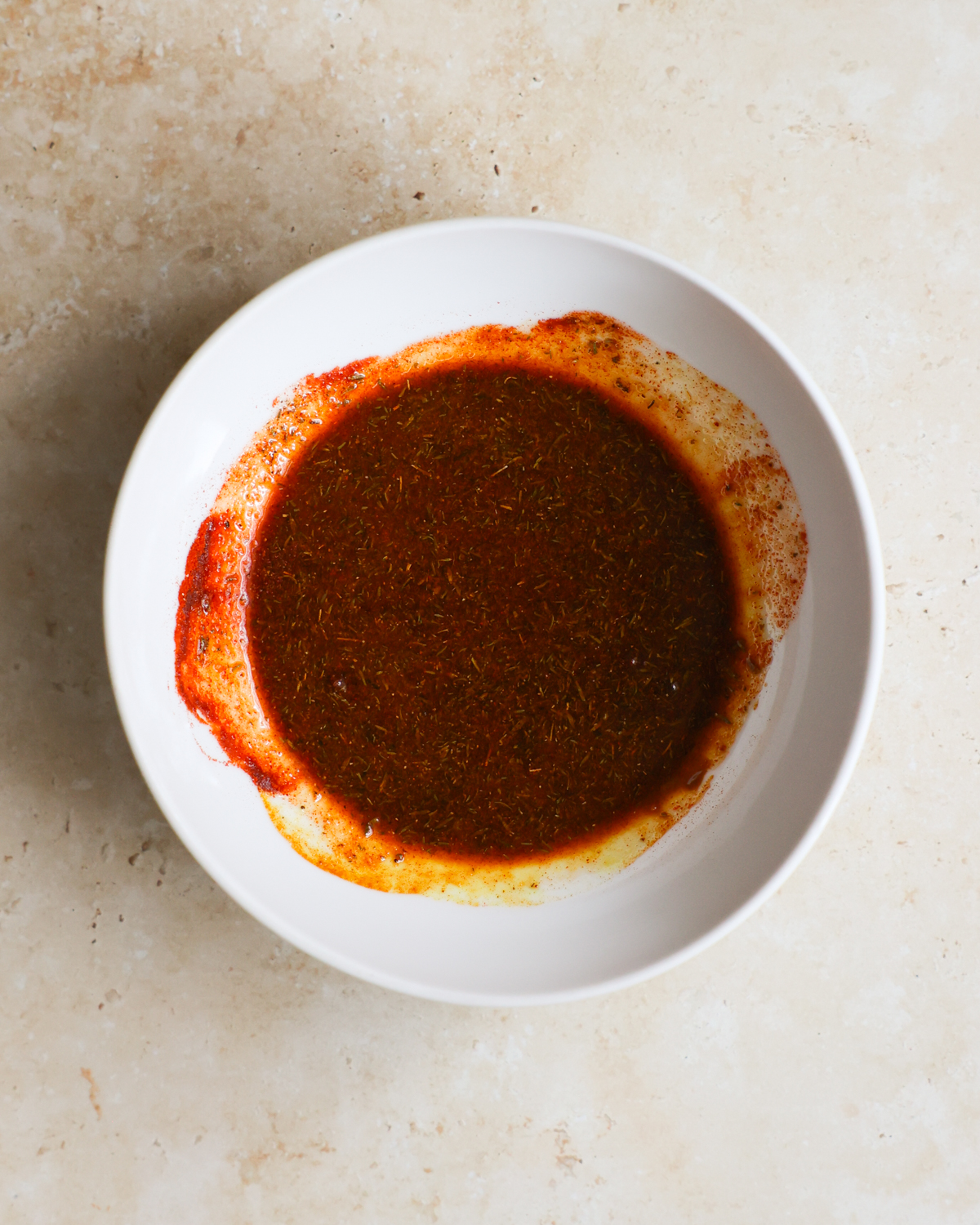
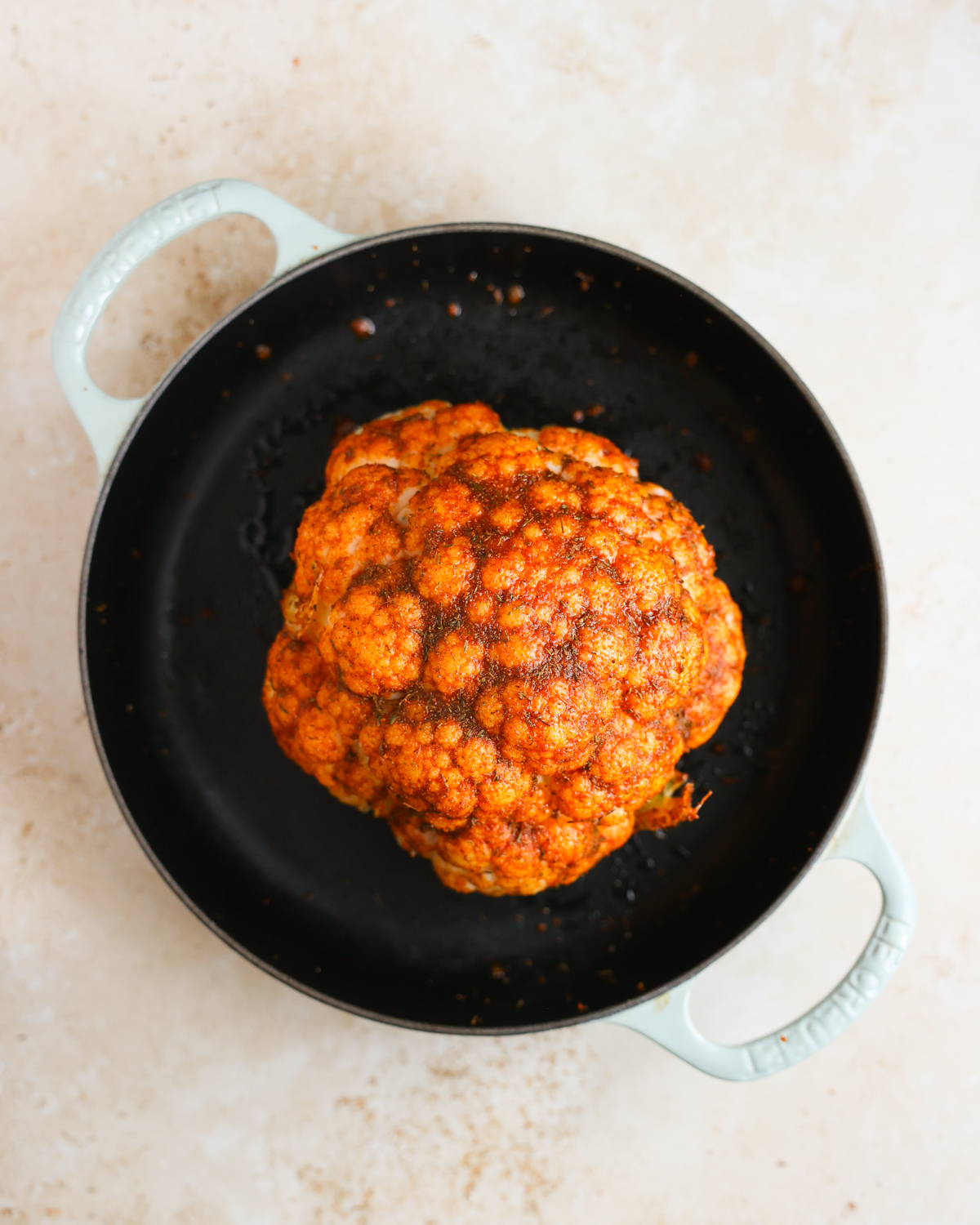
- Roast the Cauliflower. Roast in the oven at 375°F for about 30 minutes until golden and tender.
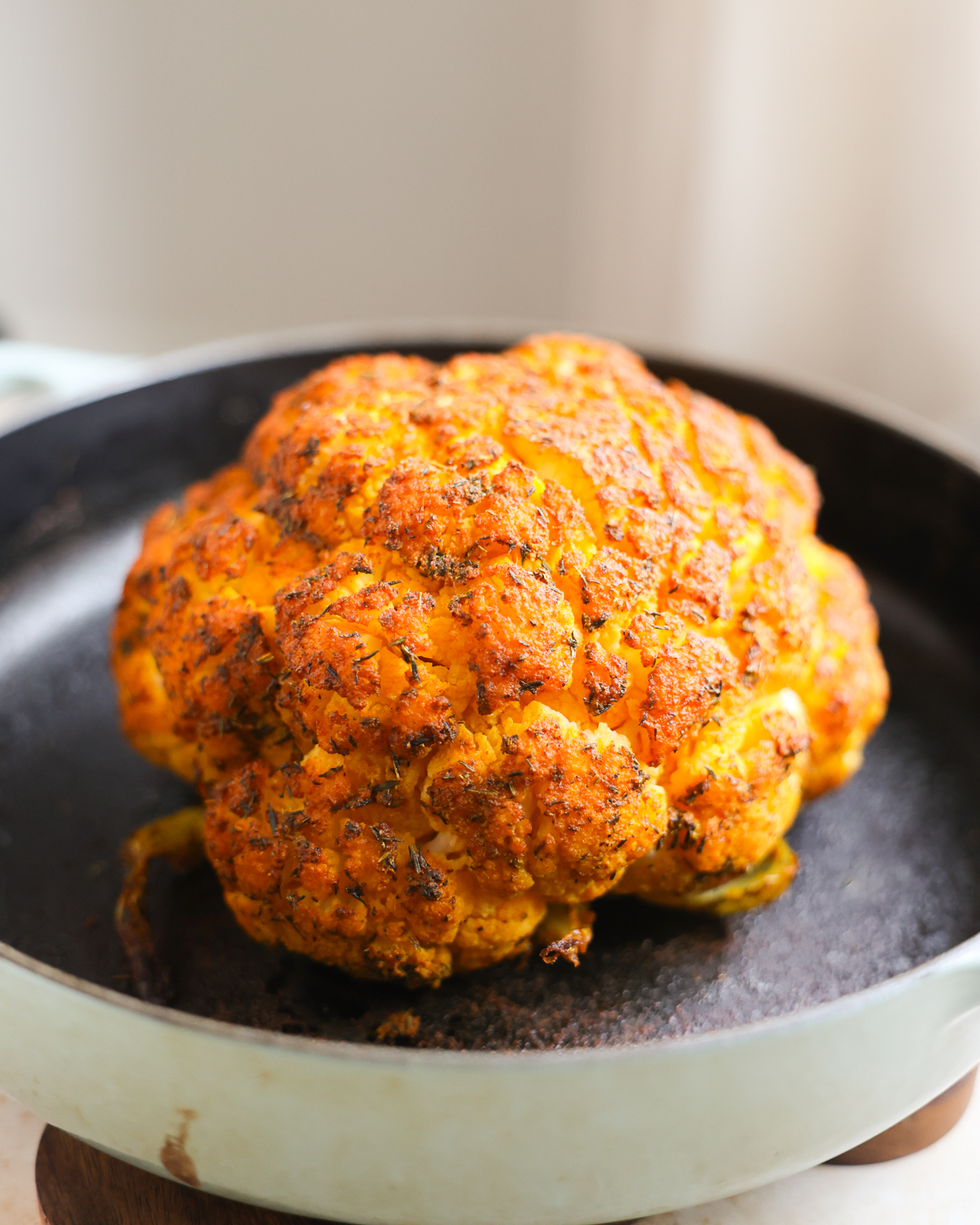
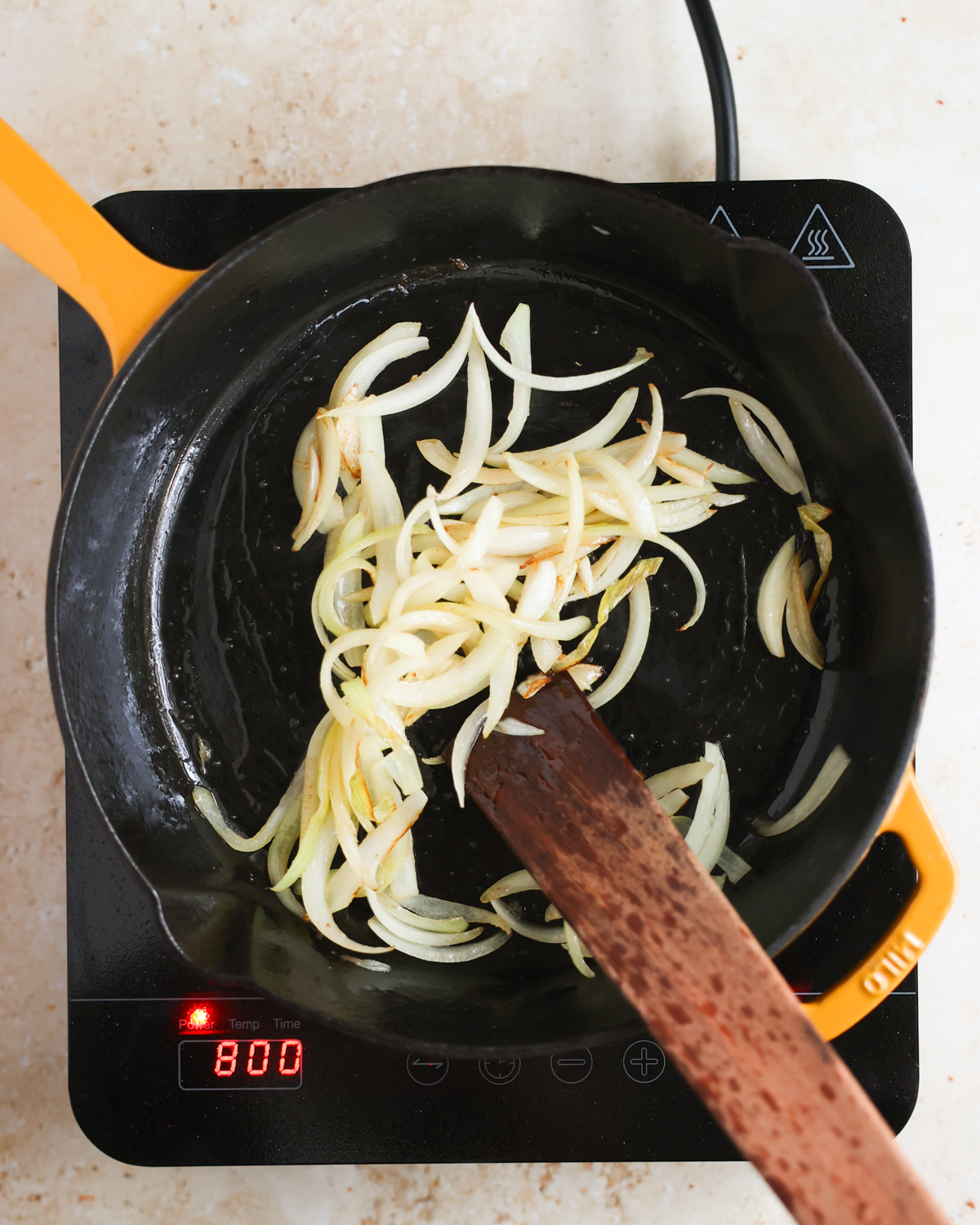
- Sauté the Onions. In a separate skillet while the cauliflower roasts, cook the onions in olive oil and a pinch of salt over medium heat for about 8 minutes, or until softened and lightly caramelized.
- Add the Flour. Sprinkle the flour over the onions, and stir. Toast the flour in the pan for about 3 minutes, until it is lightly browned.
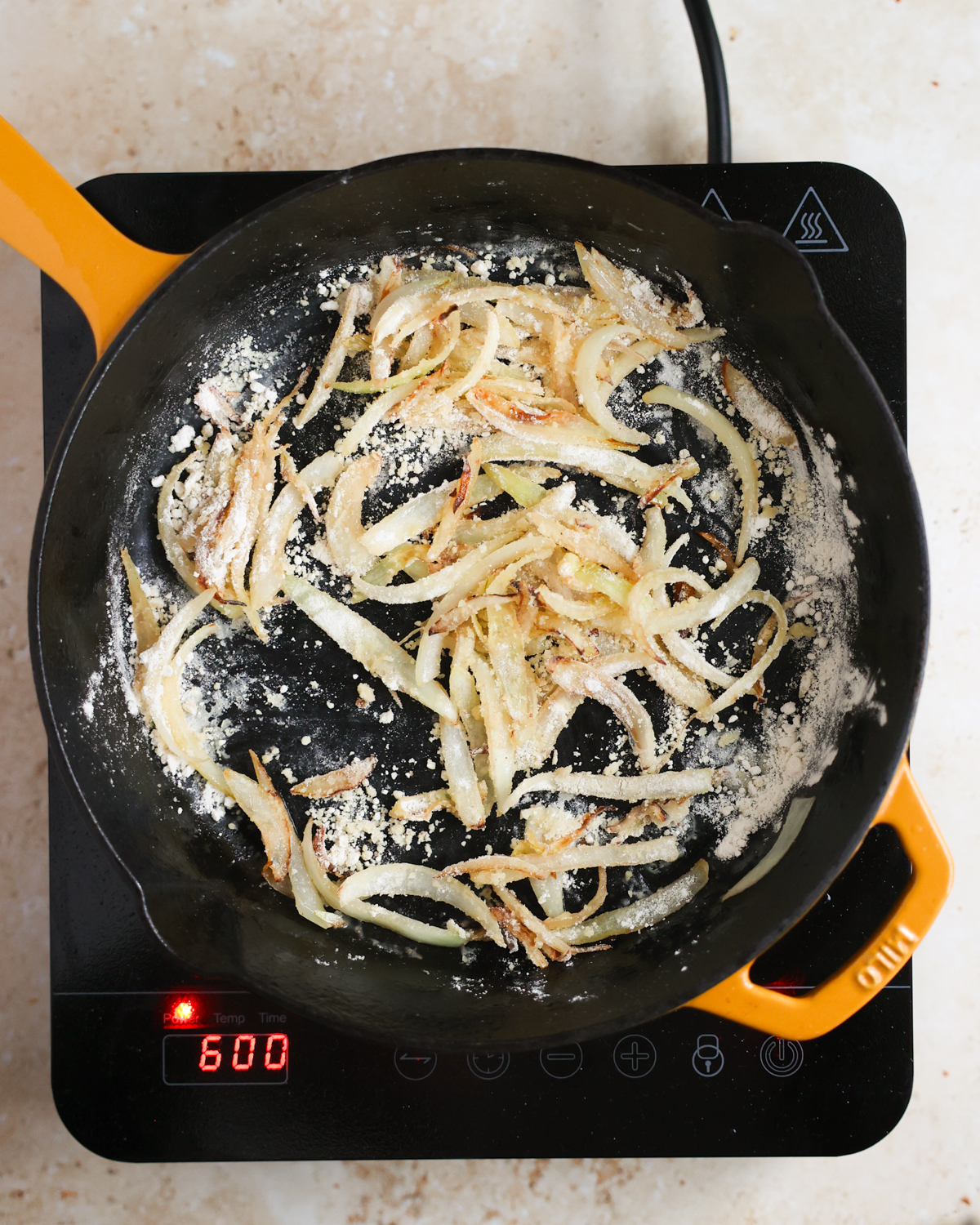
- Build the Piccata Sauce. Add the white wine to the pan. Using your spoon or a spatula, deglaze the pan by scraping the bottom to release any stuck bits. Stir in the vegetable broth, lemon juice, capers, and black pepper.
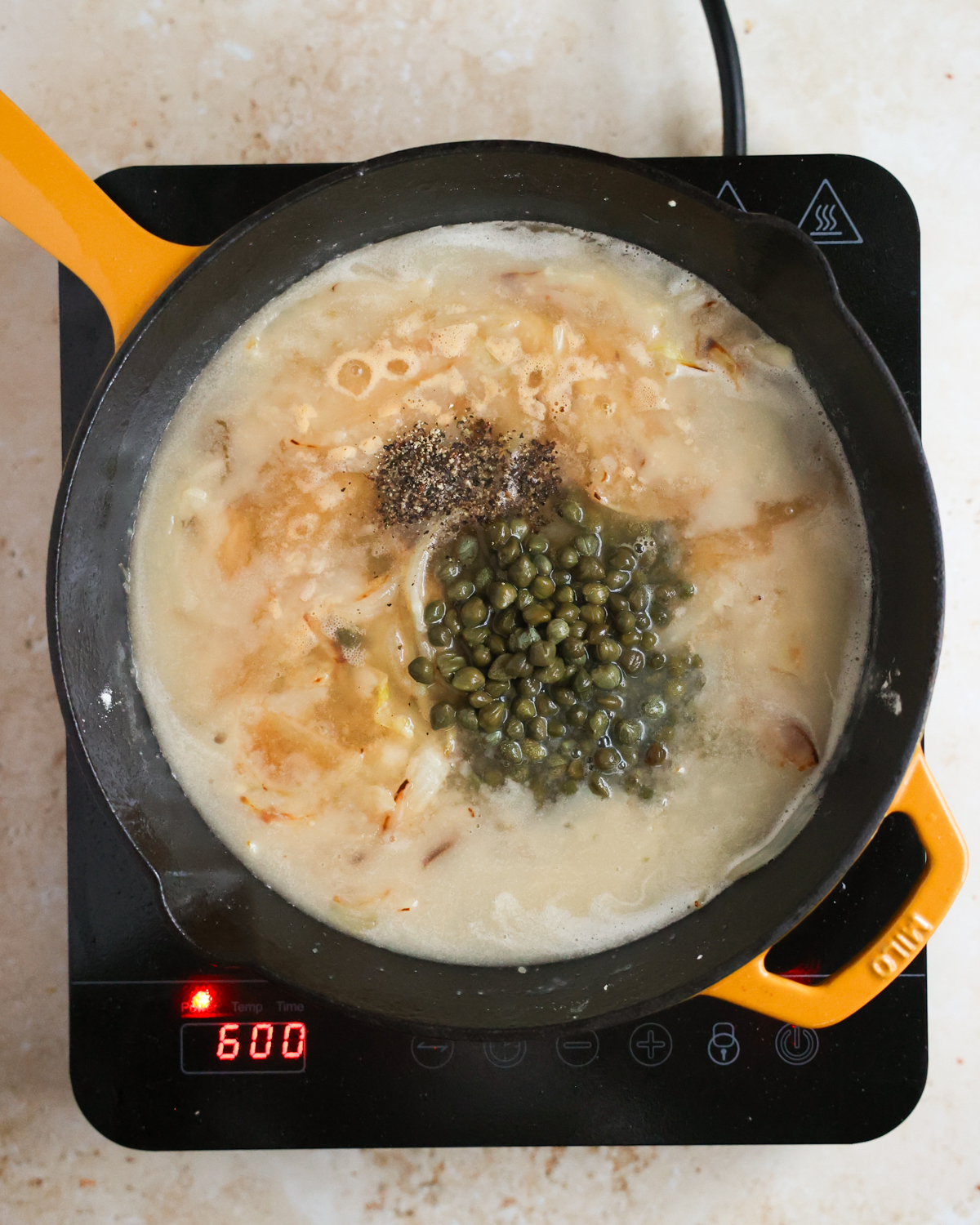
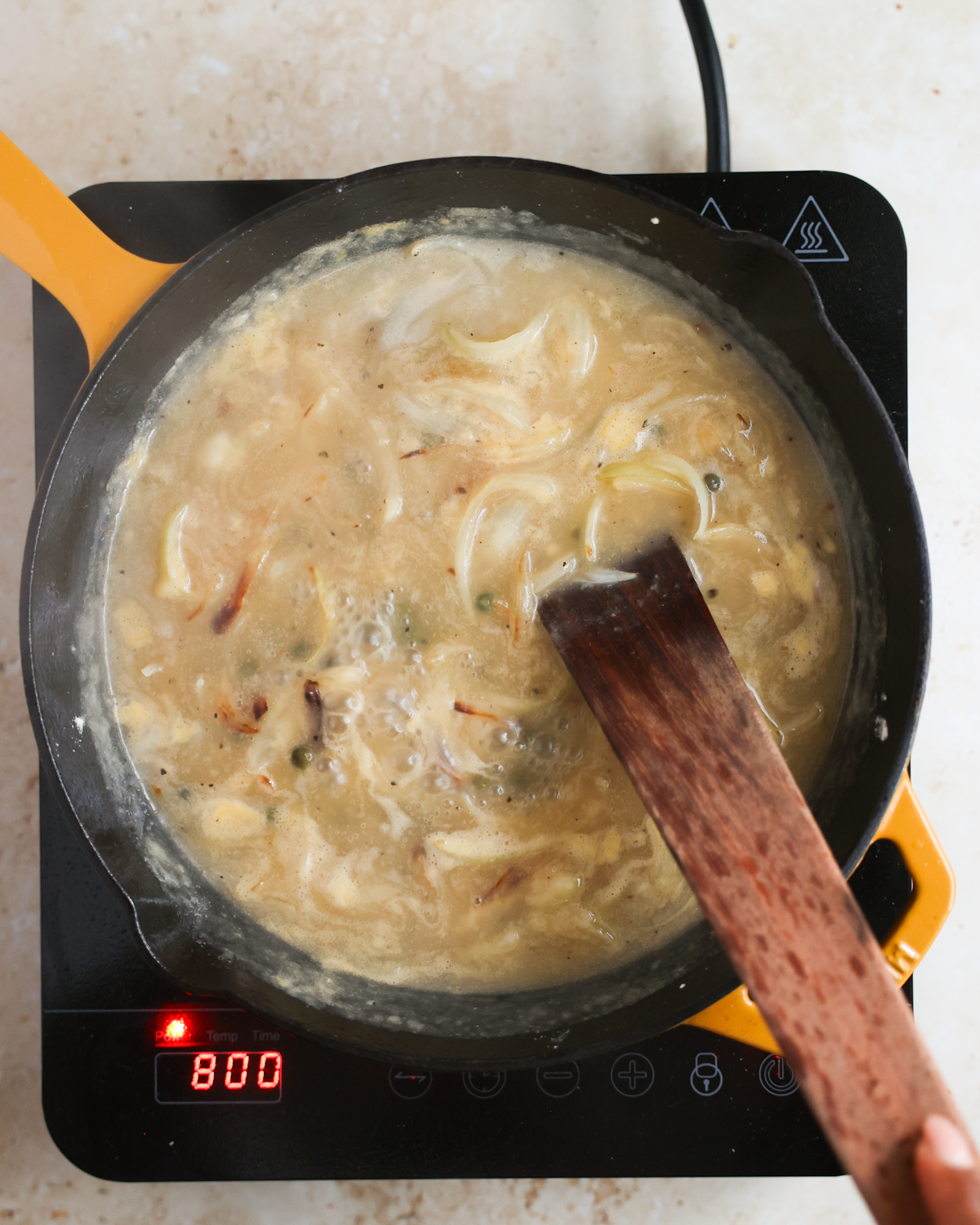
- Thicken the Sauce. Bring the mixture to a simmer and cook for 10 minutes, until the piccata sauce is thickened and glossy. Remove from the heat. Season to taste with more lemon juice and salt.
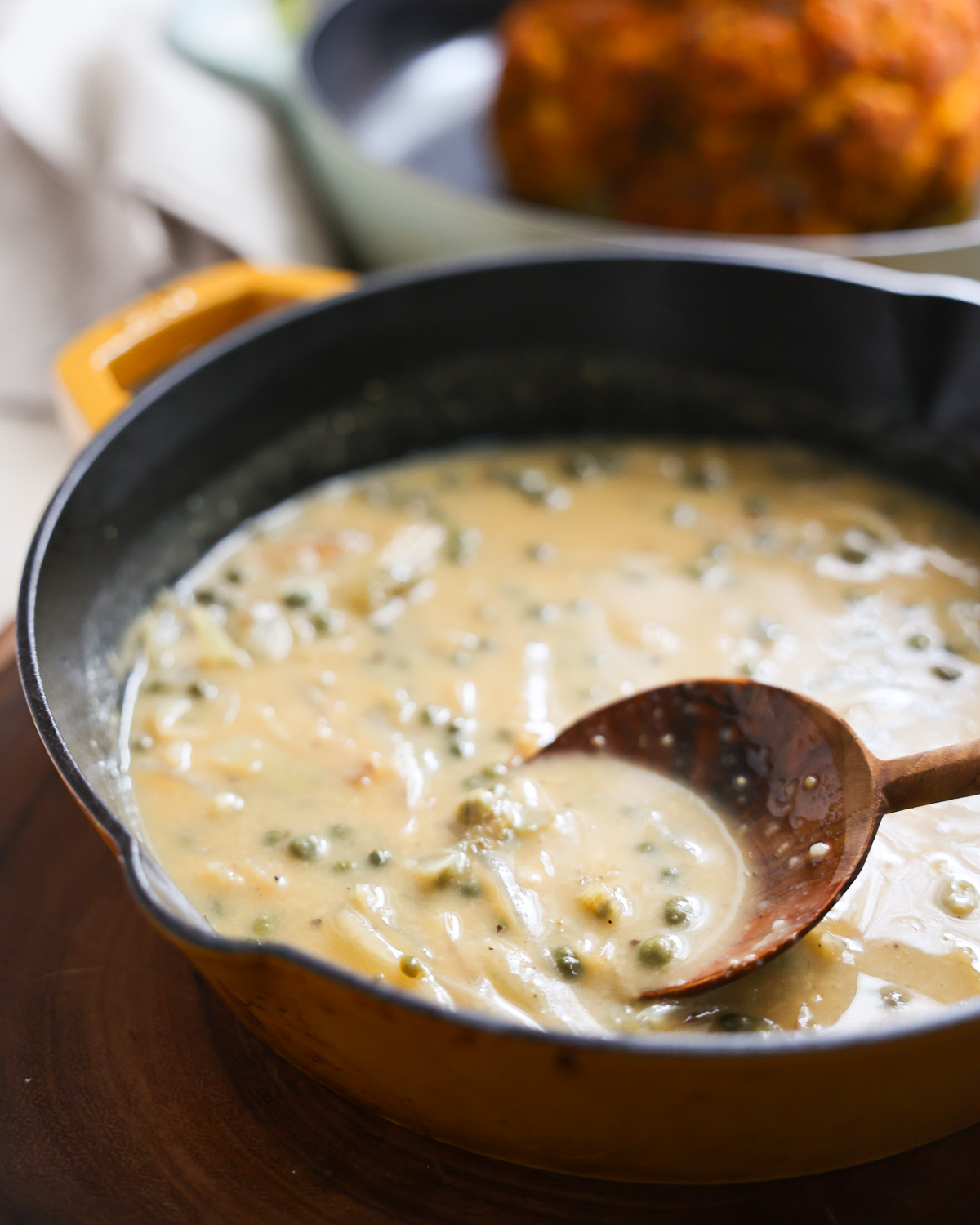
- Serve. Pour the piccata sauce onto a serving platter and place the baked cauliflower head on top. Garnish with fresh chopped parsley and freshly ground black pepper, and serve hot with lemon wedges on the side.
Jenné’s Recipe Tips
- Properly prepare the cauliflower. Before steaming, remove the outer leaves from the cauliflower and trim the base so the head sits stably and flat. Rinse under cold running water to remove any dirt or debris.
- Steam before roasting. Par-cooking the cauliflower ensures it roasts evenly without drying out in the oven.
- Generously season the cauliflower. Use your hands or a pastry brush to work the seasoning mixture into every nook and cranny of the cauliflower head. This provides an even, delicious flavor in every bite.
- Toast the flour. Don’t skip toasting the flour in the pan for a few minutes before adding the remaining piccata sauce ingredients. This prevents a raw flour taste and creates a smoother, more flavorful sauce.
- Don’t rush the simmer. Allow the sauce to reduce for the full 10 minutes to thicken properly. It’s worth the wait!
- Taste and adjust. Once the sauce is prepared, adjust with more lemon juice, pepper, or salt to suit your taste preference.
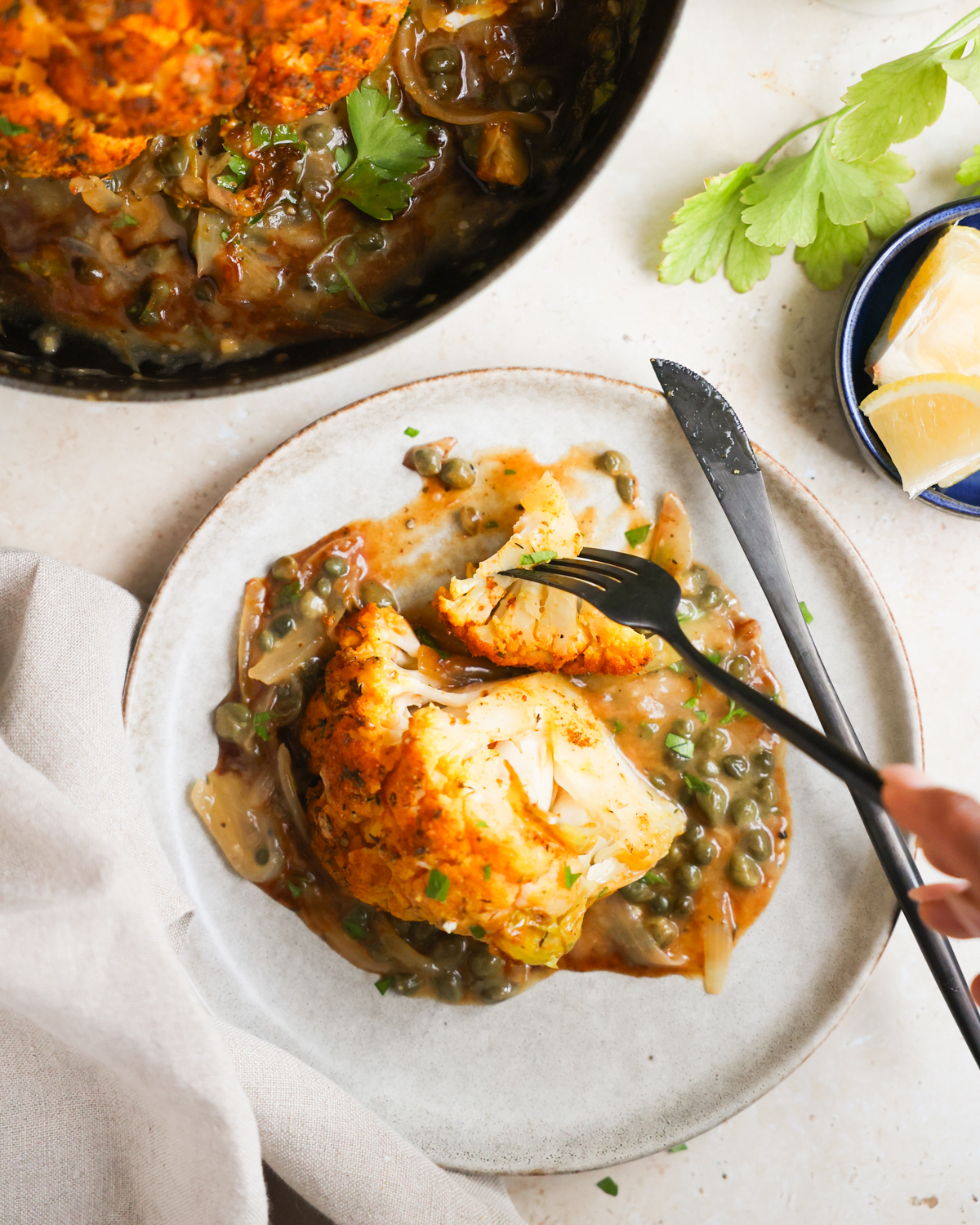
- Slice in wedges to serve. Use a large, sturdy knife to cut straight down through the roasted whole cauliflower core into 4-6 wedges, like you would a pie. Keeping the core intact helps each serving stay together. Spoon sauce onto each plated serving.
Storage Directions
- Refrigerating: Store leftover baked whole cauliflower in an airtight container, separate from the sauce, for up to 3 days. I don’t recommend freezing whole cauliflower recipes.
- Reheating: Reheat the cauliflower in the oven at 350ºF for 10-12 minutes. Warm the sauce in a saucepan over low heat until warmed through, adding a splash of broth if needed to loosen the texture.
Frequently Asked Questions
Yes. For an alcohol-free version, replace the wine with 1 additional cup of broth and 1-2 tablespoons of lemon juice.
It should pierce easily with a fork and be golden on the outside. If it’s still firm, roast for an additional 5-10 minutes.
This recipe is best prepared and served fresh, but you can steam and season the cauliflower up to one day in advance, and store it in the refrigerator in an airtight container. Then roast just before serving for the best texture. Similarly, the sauce is best served freshly made. But if needed, prepare it up to one day ahead, then store it in the refrigerator in an airtight container. Reheat just before serving.
More Vegetable Entree Recipes
- 1 medium whole cauliflower, about 2lb
- 1 ½ tsp sea salt, plus more to taste
- 1 tsp dried thyme
- 1 tsp smoked paprika
- 1 tsp garlic powder
- 1/4 tsp turmeric powder
- 3 tbsp extra virgin olive oil
- 1/2 yellow onion, sliced; or 1/2 leek
- 2 tbsp all-purpose flour , or 1-to-1 gluten-free flour
- 1 cup dry white wine, such as pinot grigio, chardonnay, or sauvignon blanc
- 1 cup vegetable stock or broth, OR 1 cup water + 2 tsp Better than Bouillon vegetable paste
- 1 whole lemon, juiced, or about 1/4 cup lemon juice
- 1/4 cup capers, drained
- 1 tsp freshly ground black pepper
- 1/4 cup fresh chopped parsley
Prevent your screen from going dark
-
Remove the outer leaves from the cauliflower and trim the base so the head sits flat and stable.
-
Place a large steaming basket in a large pot. Bring the water to a boil over high heat. Place the cauliflower in the steam basket, cover the pot, and steam over medium-high heat for 10-15 minutes, or until the cauliflower is easily pierced with a paring knife.
-
Remove the pot from the heat and remove the lid. Allow the cauliflower to cool for about 5 minutes or until it is safe to handle. While the cauliflower cools, preheat the oven to 375°F.
-
Once safe to handle, transfer the cooled cauliflower to a baking dish or a cast-iron skillet.
-
In a small bowl, combine the salt, thyme, paprika, garlic powder, turmeric, and 2 tablespoons of olive oil. Brush the mixture onto the cauliflower, using your hands or a pastry brush to coat its entire surface.
-
Roast the cauliflower for 30 minutes, or until golden and fork-tender.
-
While the cauliflower roasts, warm the remaining tablespoon of oil in a skillet or saucepan on medium heat. Add the onions and a pinch of salt. Sauté until the onions are soft and beginning to caramelize: about 8 minutes.
-
Sprinkle the flour over the onions, and stir. Toast the flour in the pan for about 3 minutes, until it is lightly browned.
-
Pour the white wine into the pan. Using your spoon or a spatula, deglaze the pan by scraping the bottom to release any stuck bits.
-
Stir in the vegetable broth, lemon juice, capers, and black pepper. Bring the mixture to a simmer and cook for 10 minutes, until the piccata sauce is smooth and thickened. Remove from the heat. Season to taste with more lemon juice and salt.
-
Pour the piccata sauce onto a serving platter and place the roasted cauliflower on top. Garnish with fresh chopped parsley and freshly ground black pepper, and serve with lemon wedges to squeeze.
- Refrigerating: Store leftover baked whole cauliflower in an airtight container, separate from the sauce, for up to 3 days. I don’t recommend freezing it. Reheating: Reheat the cauliflower in the oven at 350ºF for 10-12 minutes. Warm the sauce in a saucepan over low heat until warmed through, adding a splash of broth if needed to loosen it.
Recipe Pro-Tips
- Properly prepare the cauliflower. Before steaming, remove the outer leaves from the cauliflower and trim the base so the head sits stably and flat. Rinse under cold running water to remove any dirt or debris.
- Steam before roasting. Par-cooking the cauliflower ensures it roasts evenly without drying out in the oven.
- Generously season the cauliflower. Use your hands or a pastry brush to work the seasoning mixture into every nook and cranny of the cauliflower head. This provides an even, delicious flavor in every bite.
- Toast the flour. Don’t skip toasting the flour in the pan for a few minutes before adding the remaining piccata sauce ingredients. This prevents a raw flour taste and creates a smoother, more flavorful sauce.
- Don’t rush the simmer. Allow the sauce to reduce for the full 10 minutes to thicken properly. It’s worth the wait!
- Taste and adjust. Once the sauce is prepared, adjust with more lemon juice, pepper, or salt to suit your taste preference.
- Slice in wedges to serve. Use a large, sturdy knife to cut straight down through the roasted whole cauliflower core into 4-6 wedges, like you would a pie. Keeping the core intact helps each serving stay together. Spoon sauce onto each plated serving.
Calories: 115kcal | Carbohydrates: 5g | Protein: 1g | Fat: 7g | Saturated Fat: 1g | Polyunsaturated Fat: 1g | Monounsaturated Fat: 5g | Sodium: 943mg | Potassium: 65mg | Fiber: 1g | Sugar: 1g | Vitamin A: 264IU | Vitamin C: 1mg | Calcium: 14mg | Iron: 1mg
Leave a Reply