
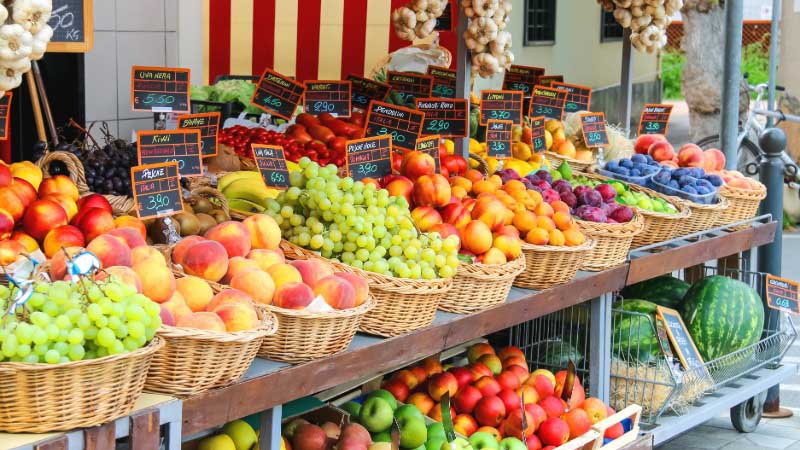
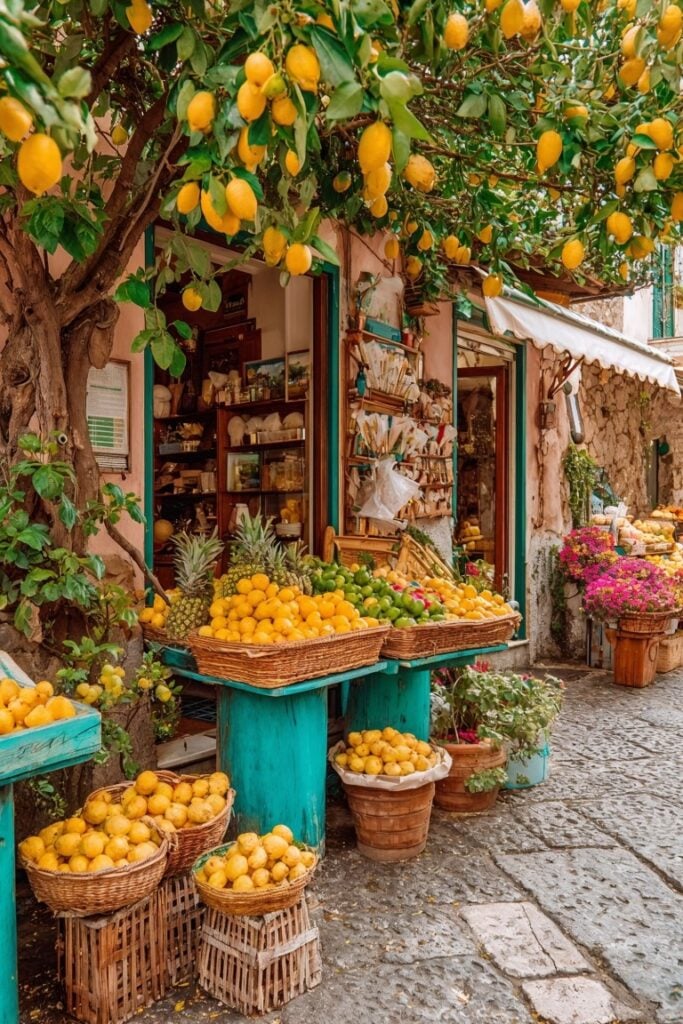
There’s something about a good market that no guidebook quite captures. The noise, the smell of fresh herbs, the boxes of tomatoes stacked precariously high, it gives you a real sense of how people actually live and eat. For anyone travelling with a flexitarian mindset, markets are genuinely useful too. You can graze, pick up picnic bits, try something unfamiliar, and sidestep the pressure of sitting down to a full restaurant meal every single day.
If you’re planning a Mediterranean cruise 2027, it’s worth doing a little research into the markets near each port before you go. A port day doesn’t have to revolve around landmarks and queues. Sometimes the most satisfying day is a slow one, market in the morning, a wander, a simple lunch somewhere unpretentious.
La Boqueria, Barcelona
Yes, it’s famous. Yes, it gets busy. But La Boqueria, just off La Rambla, is still worth your time if you go early and resist the urge to photograph everything. Catalan food culture is on full display here, seasonal fruit, roasted nuts, olives, spices, marinated vegetables and small tapas counters doing brisk trade.
For flexitarian visitors, there’s plenty to work with. Tomato bread, vegetable tortillas, fresh juice, a bag of almonds. It’s also brilliant for assembling a proper picnic if you’d rather eat outside than inside. The crowds do build as the morning goes on, so earlier really is better. And rather than rushing through, try slowing down to notice what’s actually in season. That’s when Mediterranean food makes the most sense, ripe, simple, barely needing anything done to it.
Mercat de l’Olivar, Palma de Mallorca
Palma lends itself to a gentle sort of port day, and Mercat de l’Olivar suits that pace well. It’s central, it’s manageable, and the produce is genuinely good, almonds, citrus, peppers, local olive oils, cheese, olives, bread. The kind of things you want to bring home but can’t quite fit in your luggage.
Plant-forward travellers will find plenty here without having to search hard. There are usually vegetarian-friendly pastries and simple snacks easy enough to eat on the move. A nice approach is to pair the market with a walk to Palma Cathedral and a wander through the old town, building a light lunch from what you’ve picked up rather than committing to a long sit-down. Save room for an ensaïmada, the island’s flaky, spiral pastry, later in the afternoon.
Campo de’ Fiori, Rome
Rome from Civitavecchia is a commitment. It takes time to get there, and the city demands a lot from you once you arrive. Be realistic about what’s achievable, and consider using Campo de’ Fiori as a breather between the bigger sights rather than a destination in itself.
The square hosts a daytime market, fruit, vegetables, flowers, pasta, spices, and while it’s become more visitor-orientated over the years, it still has a pleasant rhythm to it. Rome actually makes flexitarian eating quite easy: artichokes, beans, grilled vegetables, fresh bread, good olive oil. None of it complicated. A market stop in the middle of a warm Roman day can feel like exactly the right kind of pause, especially if you’ve already done the Colosseum or the Vatican in the morning.
Pignasecca Market, Naples
Naples is loud, layered and entirely itself. Pignasecca is one of its oldest markets, with stalls spilling out along narrow streets and a proper sense of local life carrying on around you. It’s not tidy or quiet, and that’s precisely the point.
There’s good stuff here for flexitarian visitors: fruit, vegetables, olives, taralli, fresh bread, simple fried snacks. Neapolitan food goes well beyond pizza too, with dishes like aubergine parmigiana, friarielli and richly sauced pasta all deserving attention. The market works best as part of a loose self-guided wander through the historic centre. Don’t over-plan it. Wear comfortable shoes, let yourself get a bit lost, and stop for coffee whenever the mood takes you.
Valletta Food Market, Malta
Valletta is compact and very walkable, one of those cities where getting from the port to the centre feels genuinely easy. Is-Suq tal-Belt, the main food market, is housed in a beautifully restored 19th-century building and offers a cleaner, more organised experience than some of the more chaotic street markets on this list.
It’s a solid option for lunch or a mid-morning break, especially if the heat is building. Maltese food carries echoes of Sicily, North Africa and, oddly, Britain, capers, tomatoes, beans, olives, hearty bread. There’s a real sense of the island’s geography in what people eat. Combine the market with a walk up to the Upper Barrakka Gardens for the harbour views, and you’ve got a very satisfying few hours.
Central Market, Athens
Via Piraeus, Athens is another port day that rewards a focused approach rather than trying to fit everything in. The Central Market is emphatically a working market, loud, busy, with separate sections for meat, fish, vegetables, herbs, pulses, nuts and spices.
For plant-forward travellers, the surrounding streets are worth exploring. Dried pulses, olives, sesame products, seasonal produce: it all reflects just how naturally plant-rich Greek cooking is at its core. Gigantes beans, lentil soup, stuffed vegetables, spinach pie: Greek food has never needed much persuasion to eat less meat. Pair the market with the Acropolis and a simple taverna meal, and call that a good day.
A Few Practical Things Worth Knowing
Most markets are busiest in the morning and start winding down by early afternoon, plan accordingly. Take a reusable bag and a bit of small change. Don’t handle produce before buying unless it’s clearly expected.
And remember that these are working markets first, visitor attractions second. A few words of the local language go a long way. Shop thoughtfully, don’t block narrow aisles, and just be a considerate guest in someone else’s everyday life.
Mediterranean markets make a quiet argument for simplicity. Fresh ingredients, seasonal snacks, a slow pace. Sometimes that’s the best thing a port day can offer.
A Collaborative Post
Other Things You Might Enjoy Reading

Leave a Reply